
Category Blog
Pet Food Extrusion Troubleshooting: A Field-Ready Guide to Diagnosing Common Defects
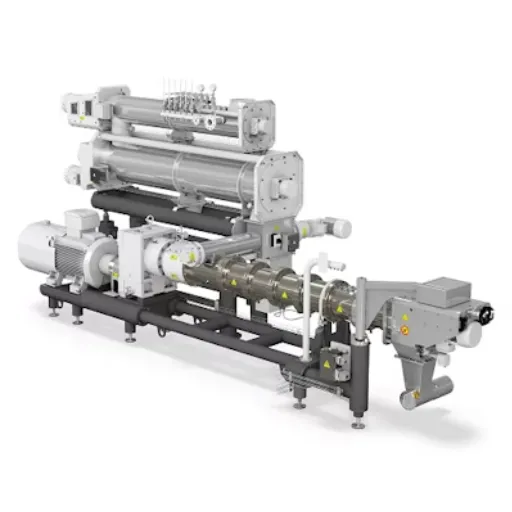
Most pet food extrusion defects trace back to one of three zones: the preconditioner, the extruder barrel, or the dryer. Pet food extrusion troubleshooting works best when operators isolate the zone first, then adjust one variable at a time. This…
Pet Food Packaging and Storage: A Manufacturer’s Guide from Extruder to Shelf

Effective pet food packaging and storage combines a high-barrier multilayer bag (oxygen transmission below 2 cc/m²/day), a controlled warehouse (under 27°C and 65% relative humidity), and a production line that hands off kibble at the right moisture and fat profile.…
A Six-Month Trust-Building Journey: Custom Aquatic Feed Production Line for Polish Sturgeon & Trout Farming

Loyal has recently solidified a long-term and trusted partnership with a premier aquaculture enterprise from Poland, a company specializing in the delicate breeding of sturgeon and trout. After a comprehensive six-month period of in-depth technical communication, on-site factory inspections, live…
How to Scale Pet Food Production: A Practical Framework for Manufacturers
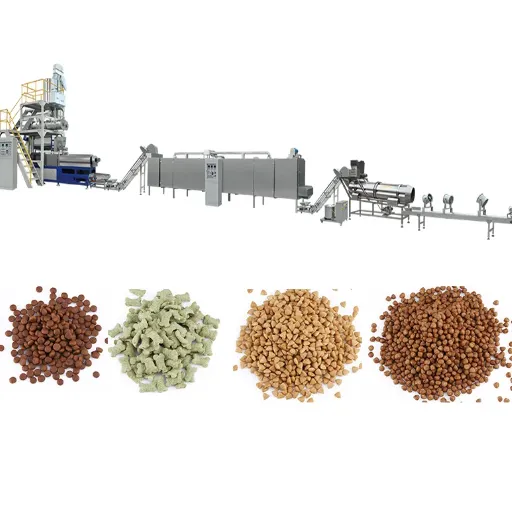
To scale pet food production, manufacturers should forecast demand, audit current line bottlenecks using OEE benchmarks, choose between shift expansion and equipment upgrades, specify modular extrusion and drying systems, automate the highest-ROI stations, then validate quality at the new throughput.…
Pet Food Extrusion vs Baking: Choosing the Right Production Process

The pet food extrusion process is the dominant manufacturing method for dry kibble, used in approximately 95% of global production, while baking offers a lower-temperature alternative that preserves more nutrients and supports premium product positioning. The right choice depends on…
Dry Dog Food Recipe Formulation: A Complete Guide for Commercial Production

Designing healthy dry dog food is also known as dry dog food recipe formulation (or formulation of dry dog food) which means designing dry dog food recipes that contain necessary nutrients and pass through the twin-screw extrusion process. On the…
Pet Food Safety Standards: A Manufacturer’s Guide to Equipment, Facility, and Process Compliance

The safety standards for pet food establish an integrated framework which combines regulations with current Good Manufacturing Practices (cGMPs) and hazard control measures to protect the safety and nutrition of pet food products while ensuring accurate product labeling. The standards…
Pet Food Production Line Layout: Complete Facility Design Guide
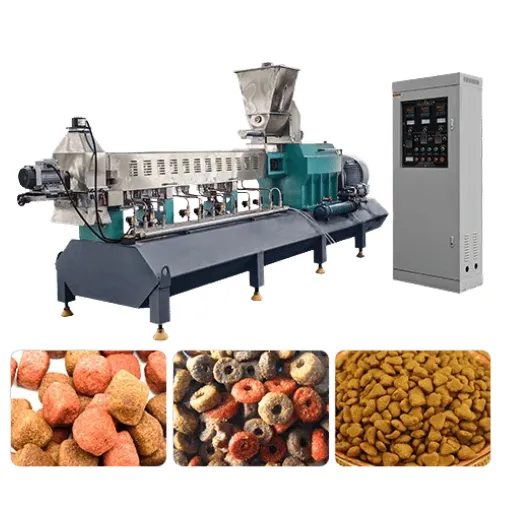
The production line layout for efficient pet food manufacturing requires an unidirectional system which starts at raw material intake and progresses through extrusion, drying, cooling, coating, and packaging operations while using HACCP zoning to create physical boundaries between pre-extrusion “dirty”…
Single Screw vs Twin Screw Extruder: A Food Manufacturer’s Selection Guide

When it comes to sophisticated, high moisture or angiographic inclusions of food formulations, there is a considerable advantage of using twin screw over the single screw extruders, whereas single screw extruders are preferred for their cheapness in the production of…
Cost of Pet Food Production Equipment: A Complete 2026 Pricing Guide

How much do you have to spend on pet feed processing machinery? For production of a typical line, the cost is in the range of 45,000to600,000and depends on the several factors such as the capacity, the layout and the components.…